
Latte vs coffee comes down to how the coffee is brewed and how much milk goes in. A latte is one or two shots of espresso topped with a lot of steamed milk and a thin layer of foam. Coffee usually means brewed drip coffee, served black or with a splash of milk. Coffee has more caffeine per cup; a latte is creamier and higher in calories.
Both start from the same kind of roasted beans; the differences come from the brewing method and the milk. A latte’s caffeine sits in one or two small shots, while drip coffee carries caffeine in every ounce of the cup. For the brewing side in depth, see our comparison of espresso vs coffee.
The short answer
| Latte | Drip coffee | |
|---|---|---|
| What’s in it | Espresso + steamed milk + thin foam | Brewed coffee, black or with a little milk |
| Typical size | 8–16 oz | 8–16 oz |
| Coffee : milk | About 1:3 to 1:5 | Mostly coffee |
| Caffeine | About 63 mg per shot (63–126 mg for most lattes) | About 95 mg per 8 oz |
| Calories, 12 oz | About 155 kcal (2% milk, unsweetened) | About 2–5 kcal (black) |
| Taste | Mild, creamy, sweet from milk | Coffee-forward, lighter body, more acidity |
| Texture | Silky, velvety | Thin, clean |
Caffeine and calorie figures come from USDA FoodData Central and Starbucks nutrition data. Home and café versions vary with shot count, cup size and milk.
What is the difference between a latte and coffee?
The difference is two things: espresso instead of brewed coffee, and far more milk.
A latte starts with espresso, a small, concentrated shot of about 1–2 oz. It is then filled with steamed milk, which makes up roughly three quarters or more of the drink. USDA’s standard latte recipe, for example, uses about 62 g of espresso to 305 g of milk.
“Coffee” on a café menu usually means brewed coffee: drip, pour-over or batch brew. It is mostly coffee, and any milk is a splash you add yourself. So a latte is really a milk drink flavored with espresso, while coffee is coffee that you may lighten.
How a latte and drip coffee are made
Drip coffee uses medium-ground coffee and gravity. Hot water flows through the grounds for several minutes and drips into a pot or cup. Far more water passes through the coffee than in espresso, so the result is light in body and large in volume.
A latte starts with espresso: finely ground coffee packed into a basket, with hot water forced through it under pressure for about 20–30 seconds. That makes a thick, concentrated shot with crema. The milk is then steamed with a wand, which heats it and adds a small amount of air for a glossy, velvety texture.
That means a real latte needs an espresso machine or a close substitute. Our guide on how to make a latte covers both, including frothing milk without a steam wand.
Espresso vs latte: what changes when you add milk?
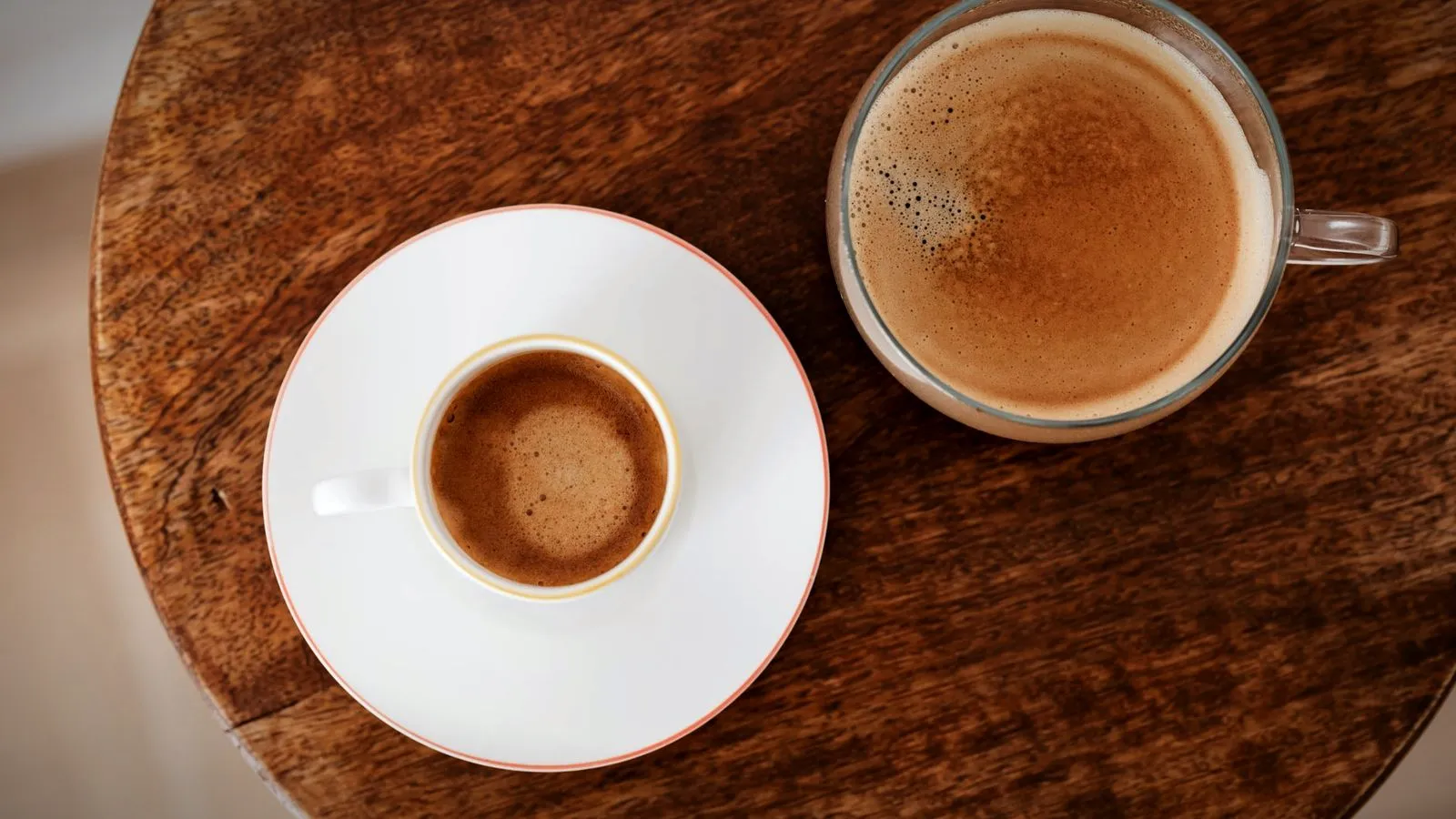
An espresso is just the shot: about 1 oz (30 ml) of concentrated coffee brewed under pressure and served in a small cup. A latte is that same espresso, usually a double, plus 6–10 oz of steamed milk and a thin layer of foam. Every latte contains espresso, but an espresso contains no milk.
| Espresso | Latte | |
|---|---|---|
| What’s in it | Coffee only | Espresso + steamed milk + thin foam |
| Typical size | 1 oz single, 2 oz double | 8–16 oz |
| Caffeine | About 63 mg per 1 oz shot | The same as its shots, about 63–126 mg |
| Calories | About 3 kcal per 1 oz shot | About 155 kcal for 12 oz with 2% milk |
| Taste | Intense, bittersweet, crema on top | Mild, creamy, gently sweet |
Milk adds no caffeine, so a latte has exactly the caffeine of the espresso in it. What milk changes is concentration: USDA lists espresso at 212 mg of caffeine per 100 g and a latte at 36 mg per 100 g. That is why a latte tastes so much softer. For per-shot numbers, see how much caffeine is in a shot of espresso.
If a latte tastes too milky but straight espresso is too intense, a smaller milk drink sits in between. Our macchiato vs latte comparison shows how far the milk can shrink.
Latte vs coffee caffeine
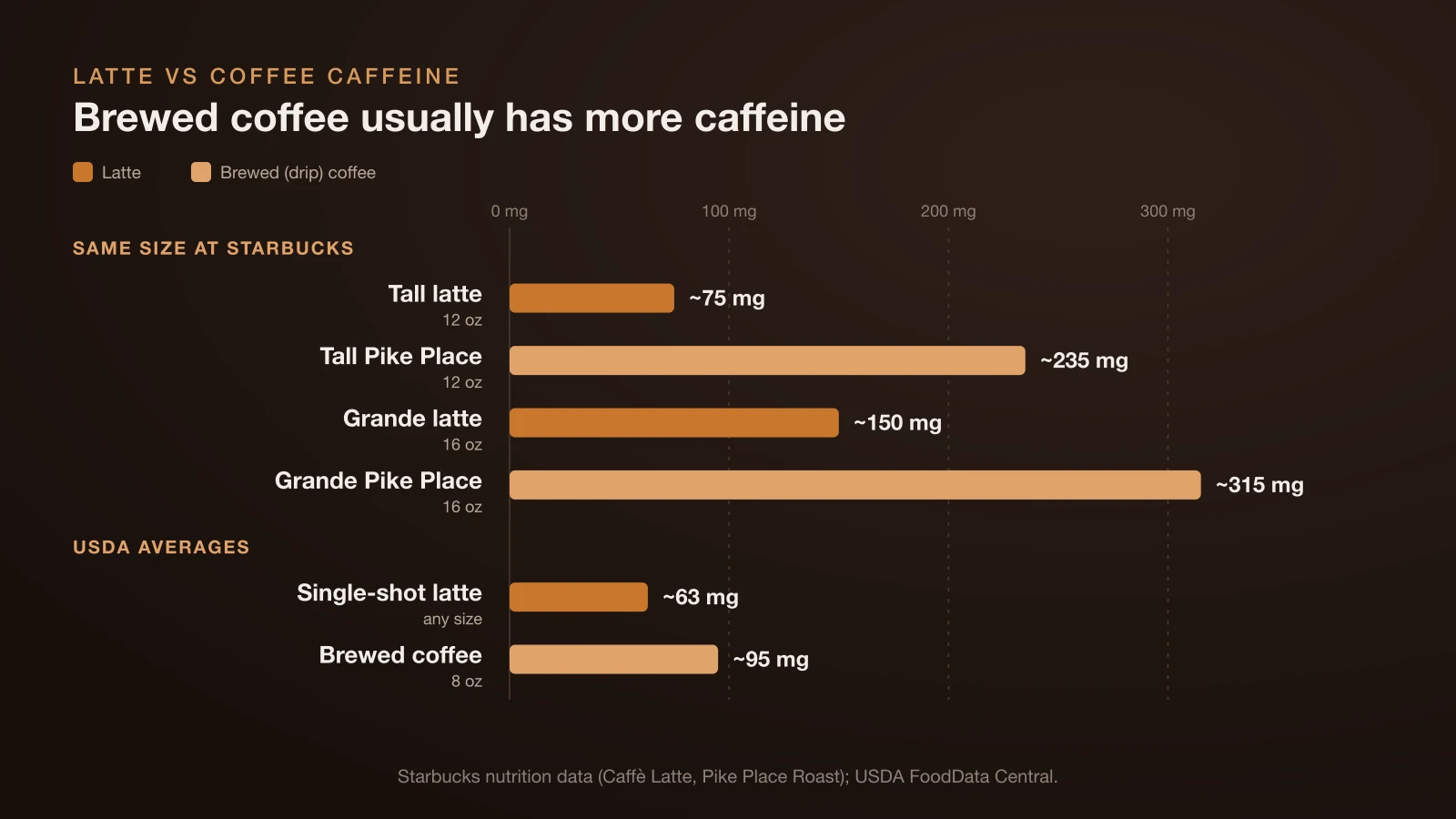
Per serving, brewed coffee usually has more caffeine than a latte of the same size. A latte’s caffeine comes only from its espresso shots; milk adds none. Drip coffee, by contrast, is caffeine all the way to the top of the cup.
| Drink | Size | Caffeine |
|---|---|---|
| Brewed coffee (USDA) | 8 oz | about 95 mg |
| Latte, single shot | any size | about 63 mg |
| Latte, double shot | any size | about 126 mg |
| USDA reference latte | 8 oz / 12 oz | about 86 mg / 130 mg |
| Brewed coffee (FDA typical range) | 12 oz | 113–247 mg |
A double-shot latte can match or beat a small 8 oz cup of drip coffee, but larger brewed coffees pull ahead quickly. For every size, shot and chain, see our full guide to how much caffeine is in a latte.
Latte vs coffee at Starbucks, size by size
Starbucks’ published figures, as of October 2026, show the gap at every size. The hot Caffè Latte uses one shot in a Short or Tall and two in a Grande or Venti, made with 2% milk:
| Size | Caffè Latte | Pike Place Roast (brewed) |
|---|---|---|
| Short (8 oz) | 75 mg, 100 kcal | 155 mg, 5 kcal |
| Tall (12 oz) | 75 mg, 150 kcal | 235 mg, 5 kcal |
| Grande (16 oz) | 150 mg, 190 kcal | 315 mg, 5 kcal |
| Venti (20 oz) | 150 mg, 250 kcal | 390 mg, 5 kcal |
The brewed coffee has about two to three times the caffeine at each size, and the gap widens in a Venti because the latte stays at two shots. An Americano, espresso topped with hot water, sits in between: Starbucks lists its Grande at 225 mg from three shots.
What about decaf?
Decaf shrinks both drinks to small amounts. Starbucks lists its Decaf Pike Place Roast at 15 mg in a Short up to 30 mg in a Venti, and the FDA puts decaf coffee at 2–15 mg per 8 oz cup. A decaf latte usually has only a few milligrams per shot; our guide to caffeine in decaf espresso has the measured ranges.
Latte vs coffee calories and nutrition
Black coffee is almost calorie-free: USDA lists brewed coffee at 1 kcal per 100 g, about 2 kcal in an 8 oz cup. Starbucks lists its Pike Place Roast at 5 kcal in every size. A latte’s calories come from the milk.
USDA’s standard latte, made with 2% milk and no syrup, has 43 kcal per 100 g. Scaled to a 12 oz (360 g) portion, that is an estimate of:
- about 155 kcal
- about 10 g of protein
- about 15 g of sugars, all naturally present in the milk in an unsweetened latte
- about 380 mg of calcium
Starbucks’ figures for its 2% milk latte (table above) sit close to this estimate. USDA’s nonfat latte comes in at 30 kcal per 100 g, about 108 kcal for 12 oz. Flavor syrups, sauces and whipped cream add sugar and calories on top of these numbers. Our breakdown of calories in a latte covers each milk type, size and syrup.
Latte vs coffee taste and texture
A latte tastes softer, rounder and creamier than drip coffee, while drip coffee tastes more clearly of the beans and feels thinner on the tongue.
- Coffee flavor. Drip coffee tastes more clearly of the beans, including their acidity and fruit or chocolate notes. In a latte, those flavors are softened by milk, so it tastes rounder and more like “coffee and cream.”
- Sweetness. Steamed milk tastes sweeter than cold milk, so an unsweetened latte already seems gently sweet.
- Body. A latte is heavier and silkier on the tongue. Drip coffee is thin and clean by comparison.
- Bitterness. Espresso on its own is intense, but a latte is usually less bitter than black coffee because of the milk.
If you like a bolder milk drink, ask for an extra shot or a smaller cup. Our latte milk ratio guide shows how much milk goes in each size.
Latte vs coffee with milk
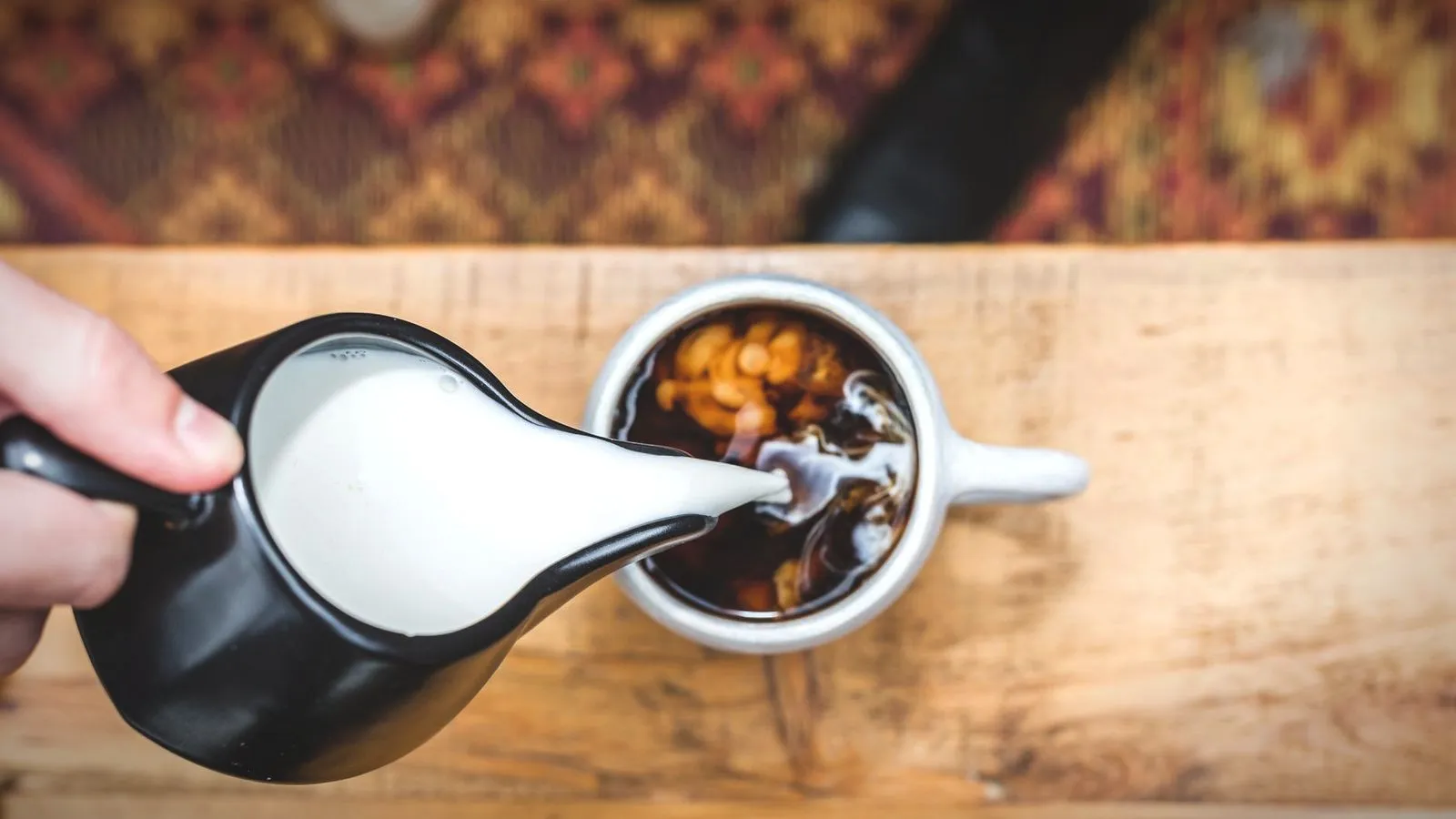
Adding milk to drip coffee does not make it a latte. Coffee with milk is still mostly coffee, lightened with a splash of milk, usually cold. A latte reverses that: it is mostly steamed milk with a small amount of espresso.
The drink in between is the café au lait: brewed coffee mixed with hot milk, often in roughly equal parts. It is milkier than coffee with a splash, but made with brewed coffee rather than espresso, so it tastes lighter than a latte. For the full family of milk drinks, see espresso with milk.
Can you make a latte with regular coffee?
You can make a latte-style drink with regular coffee, but it will not taste like a true latte. Drip coffee is only about a fifth as concentrated as espresso, so a latte’s worth of milk drowns its flavor.
Three workarounds get closer, from most to least latte-like:
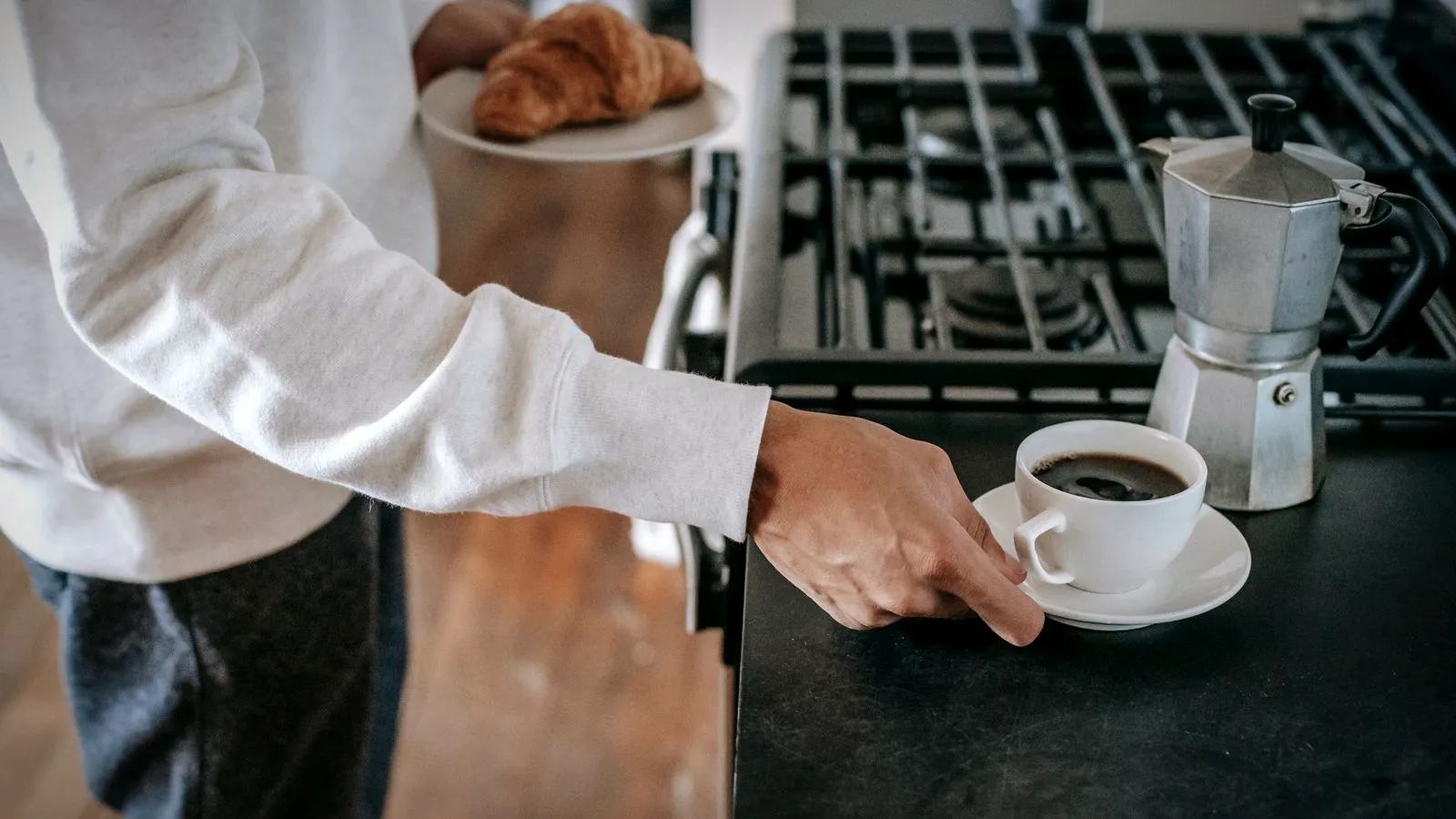
- Use a moka pot. A stovetop moka pot brews a small, strong coffee that stands up to milk far better than drip. Our guide on how to use a moka pot covers the method.
- Brew a concentrate. Use much more ground coffee for the same water, or less water for the same coffee, then add less milk than a café latte would.
- Make a café au lait instead. Mix strong brewed coffee with hot milk in roughly equal parts, which is what that drink is designed for.
In each case, foam the milk to get the latte texture; a French press or handheld frother works without a steam wand. Our guide to making espresso without a machine compares the stronger home brewing options.
Iced latte vs iced coffee
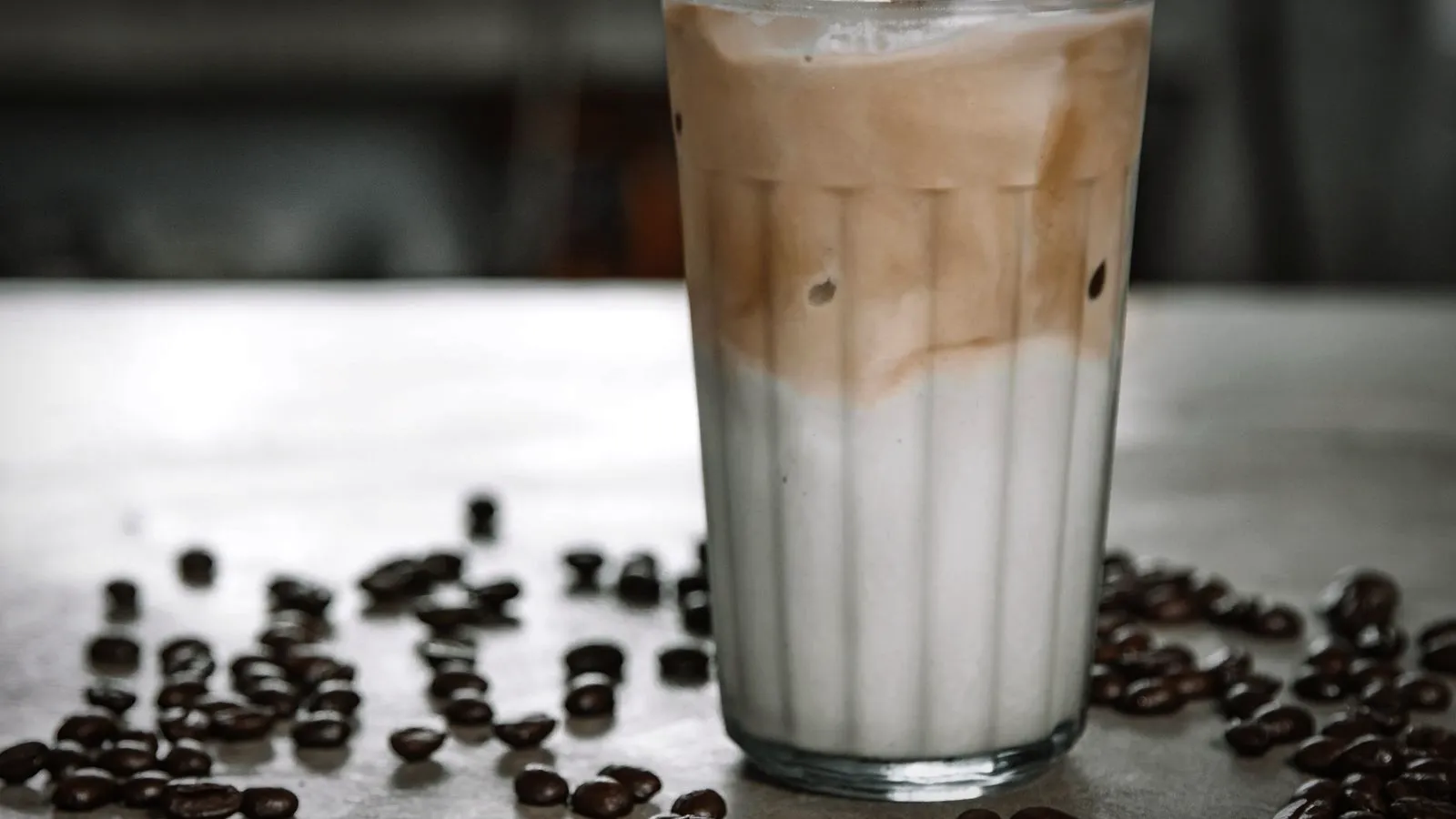
An iced latte is espresso poured over ice and topped with cold milk. No steaming is needed. An iced coffee is brewed coffee, chilled or brewed strong and poured over ice, served black or with milk and sweetener to taste.
| Iced latte | Iced coffee | Cold brew | |
|---|---|---|---|
| Base | Espresso | Brewed coffee, chilled | Coffee steeped in cold water |
| Milk | A lot, part of the recipe | Optional | Optional |
| Starbucks Tall (12 oz) | 75 mg, 100 kcal | 135 mg, 0 kcal | 155 mg, 5 kcal |
| Starbucks Grande (16 oz) | 150 mg, 130 kcal | 185 mg, 5 kcal | 205 mg, 5 kcal |
| Starbucks Venti (24 oz) | 225 mg, 180 kcal | 265 mg, 5 kcal | 310 mg, 5 kcal |
| Taste | Creamy, smooth | Lighter, more coffee-forward | Smooth, rounded |
Iced coffee and cold brew both have more caffeine than an iced latte at every Starbucks size, with almost no calories when unsweetened (Starbucks figures as of October 2026). The iced latte trades some caffeine for a creamy, milky drink. If you want an iced espresso drink without milk, an iced Americano is espresso and cold water over ice.
Is a latte stronger than coffee?
A latte is not stronger than drip coffee in caffeine per cup or in taste, but the espresso inside it is far more concentrated per ounce:
- In caffeine per serving: usually no, as the tables above show.
- In concentration of the coffee itself: yes. USDA lists espresso at 212 mg of caffeine per 100 g versus 40 mg for brewed coffee, about five times as much.
- In taste: usually no. The milk makes a latte taste milder than black coffee.
Which is healthier, coffee or a latte?
In simple nutrition terms, black coffee has almost no calories, sugar or fat, while a latte adds the calories, protein, calcium and natural milk sugar of the milk. Which suits you depends on what else you eat and drink. Plain lattes are very different from sweetened, syrup-heavy versions.
For caffeine, the FDA describes 400 mg a day as an amount not generally associated with negative effects for healthy adults, and advises people who are pregnant or breastfeeding to ask a healthcare provider. This is general information, not medical advice.
Latte or coffee: which should you choose?
Pick drip coffee for more caffeine, fewer calories and a clear taste of the beans, and pick a latte for a creamy, mellow drink that works as a base for flavors.
- Choose drip coffee if you want more caffeine, the fewest calories, or to taste the beans clearly. It is also easy to make at home with a basic brewer.
- Choose a latte if you want a creamy, mellow drink, don’t like black coffee, or want a base for flavors like vanilla or caramel.
- Choose a café au lait if you want something milky but only have brewed coffee.
At home, a latte needs espresso or a strong substitute and a way to foam milk. See espresso maker vs espresso machine if you are weighing equipment.
The bottom line
A latte is espresso with a lot of steamed milk; coffee is brewed and mostly coffee. Size for size, drip coffee usually has more caffeine and almost no calories, while a latte is creamier, sweeter-tasting and about 150 kcal for an unsweetened 12 oz cup. The same trade-off holds over ice: iced coffee and cold brew carry more caffeine than an iced latte of the same size.
Sources
- USDA FoodData Central: Coffee, Latte (36 mg caffeine and 43 kcal per 100 g; recipe and portions), Coffee, Latte, nonfat, Coffee, brewed (40 mg caffeine, 1 kcal per 100 g) and espresso (212 mg caffeine and 9 kcal per 100 g; 1 fl oz = 29.6 g)
- Starbucks nutrition, as of October 2026 (caffeine, calories and sugars by size): Caffè Latte, Iced Caffè Latte, Pike Place Roast, Decaf Pike Place Roast, Caffè Americano, Iced Coffee and Cold Brew
- Specialty Coffee Association: Defining the ever-changing espresso (archived; espresso brew time)
- U.S. Food and Drug Administration: Spilling the Beans: How Much Caffeine Is Too Much? (400 mg a day; 113–247 mg per 12 oz coffee; 2–15 mg per 8 oz decaf)