
Decaf espresso beans are ordinary coffee beans that have had most of their caffeine removed while still green, then roasted and blended to taste good as espresso. There is no special decaf plant. The difference lies in the decaffeination process, which affects flavor, how the beans roast and how you need to grind and brew them.
The bag tells you most of what matters: which process removed the caffeine, when the beans were roasted and what the blend contains. Decaf then brews like regular espresso with small changes, usually a slightly finer grind or a little more coffee in the basket.
The short answer
| Process | How the caffeine is removed | Solvent contact | US rule |
|---|---|---|---|
| Swiss Water | Green beans soak in a caffeine-free coffee extract; carbon filters trap the caffeine | None | Water process |
| Mountain Water | A water-based solution saturated with coffee solubles draws out the caffeine | None | Water process |
| CO2 (supercritical) | Pressurized carbon dioxide dissolves the caffeine | None | CO2 allowed as a processing aid (21 CFR 184.1240) |
| Ethyl acetate (“sugarcane”) | A solvent often made from fermented sugarcane | Yes, then removed | Allowed for decaffeination (21 CFR 173.228) |
| Methylene chloride | A synthetic solvent, then steamed off | Yes, then removed | Residue limit of 10 ppm (21 CFR 173.255) |
What are decaf espresso beans?
“Espresso” on a bag describes how the coffee is meant to be brewed, not a type of bean. We explain this in detail in espresso beans vs coffee beans. Decaf espresso beans follow the same rule: the roaster starts with green coffee that has been decaffeinated, then roasts and blends it for pressure brewing.
Decaffeination always happens before roasting, because caffeine is easiest to remove from green beans. That means every decaf coffee, espresso or not, goes through one of a handful of industrial processes before it reaches the roaster.
How coffee is decaffeinated
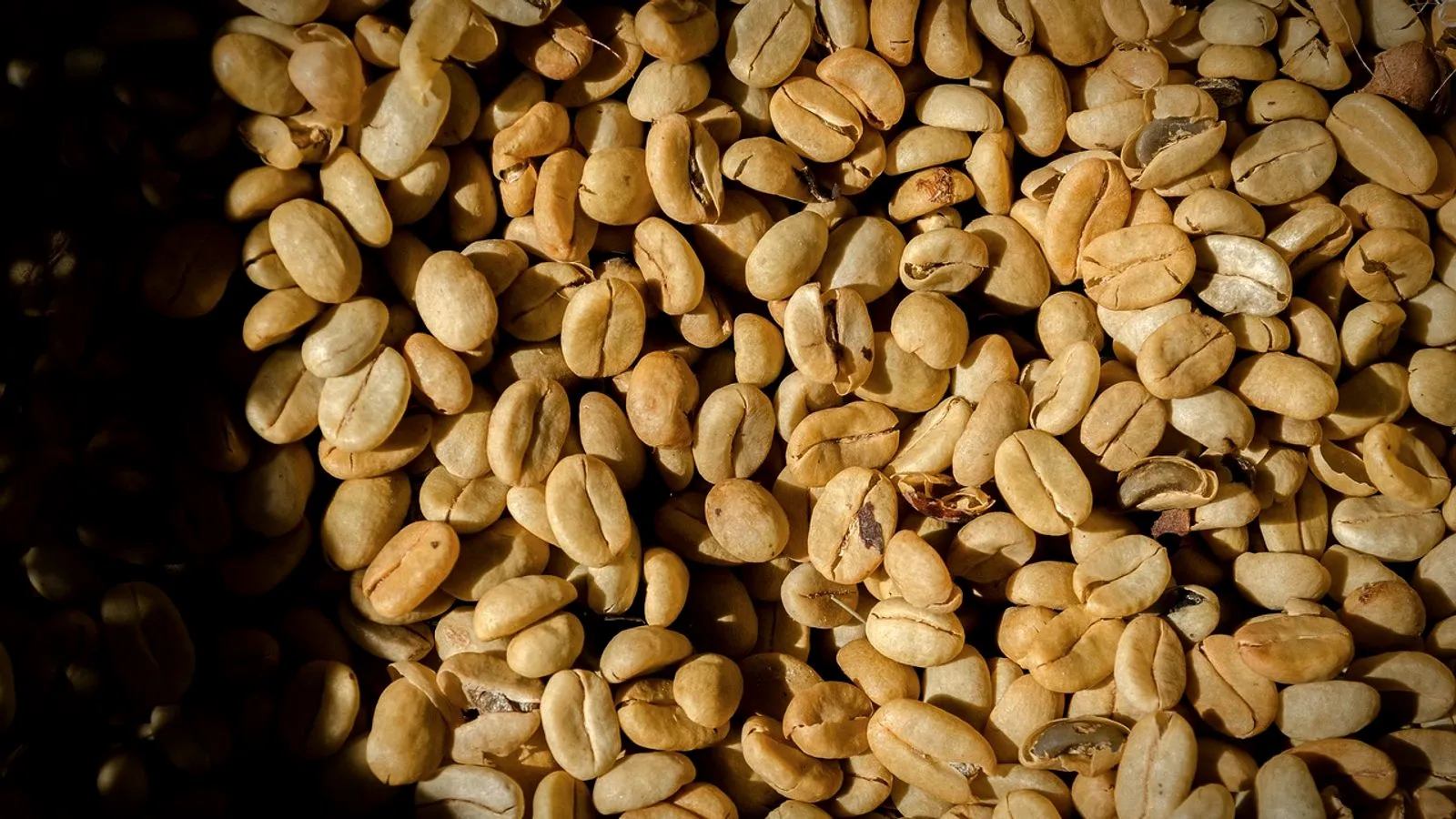
All common decaffeination methods start by steaming or soaking the green beans so the caffeine can move out of them. They differ in what carries the caffeine away: water, carbon dioxide or a solvent.
Swiss Water Process
The beans soak in a caffeine-free extract of green coffee. Because that liquid already holds the other soluble compounds in coffee, mostly caffeine moves out of the beans. The caffeine is then caught by carbon filters, which Swiss Water describes as chemical-free, and the extract is reused. Swiss Water guarantees its decaf green coffee is 99.9% caffeine-free.
Mountain Water Process
Mountain Water is the name Descamex, a Mexican decaffeinator, uses for its water process. After steaming the beans, it extracts the caffeine under controlled flow, temperature, pressure and vacuum with a water-based solution saturated with soluble solids from coffee beans, then dries the coffee in three stages. Descamex also runs a methylene chloride line, so look for the process name on the bag, not just “Mexico decaf”.
CO2 process
Carbon dioxide under high pressure acts as a solvent that bonds mostly with caffeine. The caffeine is then separated from the CO2. In the United States, carbon dioxide is classed as generally recognized as safe and is allowed as a processing aid.
Ethyl acetate (“sugarcane” decaf)
Ethyl acetate occurs naturally in fruit and is often produced from fermented sugarcane, which is why these coffees are sold as “sugarcane decaf”. The beans are washed with the solvent, which is then removed with steam. US regulations list ethyl acetate as permitted for decaffeinating coffee and tea.
Methylene chloride (“European process”)
This synthetic solvent removes caffeine efficiently and is then evaporated off. US regulations allow it for decaffeination as long as residues in roasted coffee do not exceed 10 parts per million. The National Coffee Association calls solvent decaffeination the European Method, describes it as the most common method, and notes that the solvent is reused in a closed system.
Is decaf coffee safe? The methylene chloride question
All decaf processes used commercially are permitted by US and EU regulators. The debate is about methylene chloride.
- In December 2023, the FDA filed a petition from the Environmental Defense Fund and other groups asking it to remove methylene chloride and three other solvents from the food additive regulations.
- In May 2026, the FDA reopened public comments on that petition, with the window closing on June 29, 2026.
- As of mid-October 2026, the FDA has not announced a decision. Claims that the FDA has banned it, or proposed a ban, are not accurate.
- The EPA restricted many uses of methylene chloride in 2024, but that rule was made under a law (TSCA) that excludes food additives, so it does not cover decaffeination.
If you prefer to avoid solvents entirely, choose beans labeled Swiss Water or CO2 process. Many roasters print the method on the bag; if it is not listed, ask.
How much caffeine do decaf espresso beans have?
Decaf espresso beans keep a small part of their original caffeine. The National Coffee Association describes decaffeination as typically removing around 97% of the caffeine, an industry figure rather than a US legal standard. Swiss Water guarantees its decaf green coffee is 99.9% caffeine-free.
In the cup, the NCA puts an 8 oz cup of decaf at roughly 2–15 mg, against about 95 mg for regular coffee. A decaf espresso shot lands in the same few-milligram range. For measured values per shot and per drink, see our full breakdown of how much caffeine is in decaf espresso.
How decaf beans behave in the roaster and the grinder
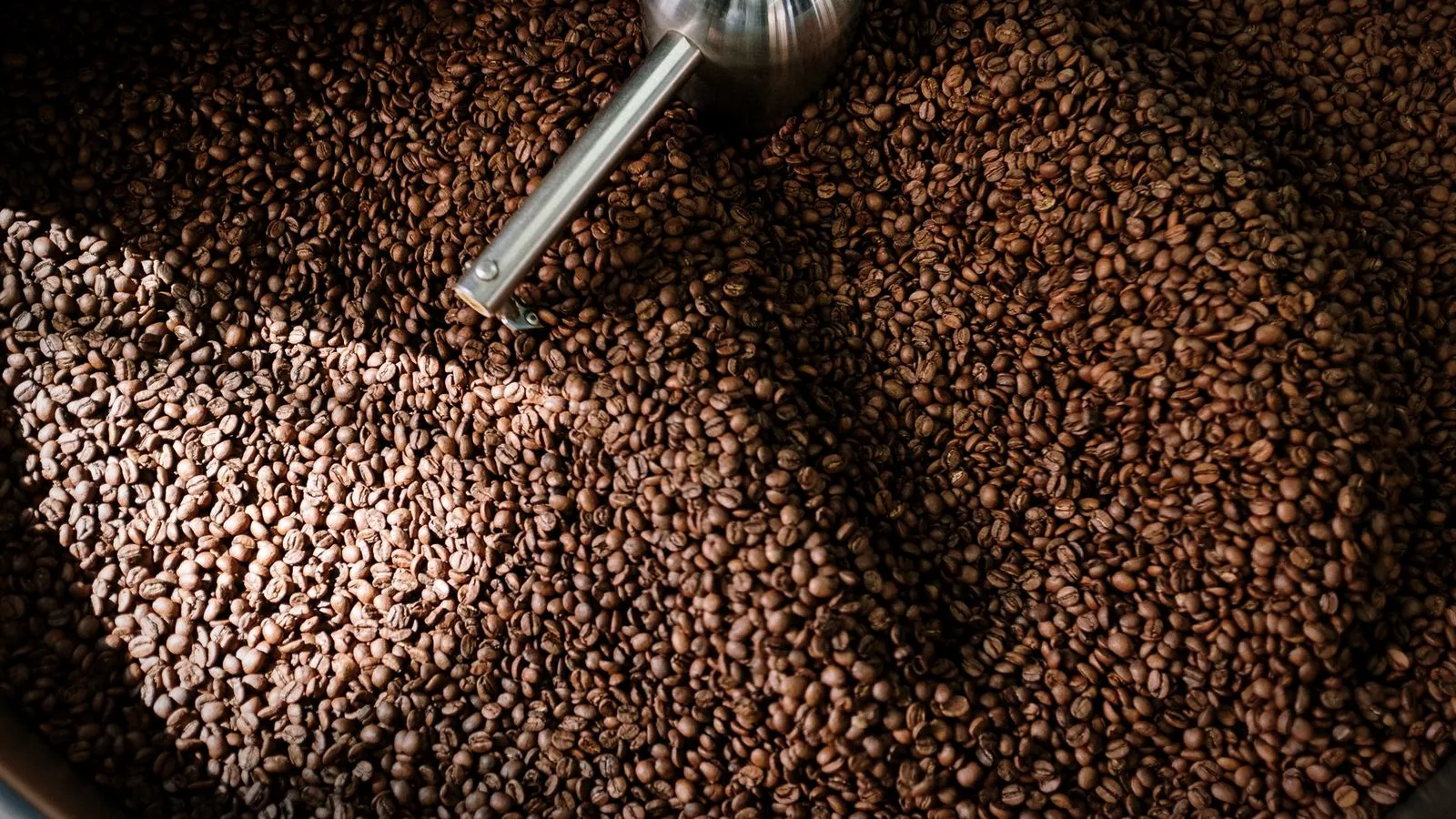
Decaffeination changes the bean’s structure, and that shows up at every later step:
- They look different from the start. Swiss Water decaf starts out a darker shade of green and stays darker through the whole roast, so bean color is a poor guide to roast level.
- They handle heat differently. Decaffeination soaks and then redries the beans, so they give up moisture earlier in the roast. Swiss Water advises roasters to go gently early in the roast rather than push hard.
- They extract differently. Swiss Water recommends a slightly finer grind, a little more coffee, or both, to make up for decaf’s slightly different chemical composition.
These differences are why a decaf from one roaster can taste noticeably better than another made from similar green coffee: the roast has to be adjusted for the bean, not copied from a regular profile.
How to dial in decaf espresso at home
Start from the same recipe you use for regular beans, then adjust:
- Dose 18 g for a double, as usual.
- Grind slightly finer than your regular espresso setting.
- Aim for about 36 g out in 25–30 seconds (a 1:2 ratio), then adjust by taste.
- If the shot is sour and fast, grind finer. If it is bitter and slow, grind coarser.
- If it still tastes thin or flat, add a little more coffee to the basket before grinding finer again, as Swiss Water suggests for decaf. Change one variable at a time.
If you buy pre-ground decaf, read our guide to espresso grounds first; freshness matters just as much with decaf. Our wider guide to dialing in espresso explains how grind, dose and yield interact.
How to read a decaf espresso label
A decaf espresso label tells you the decaffeination process, the roast date and the blend, and those three lines matter more than the brand name. Here is what common label terms mean:
| On the bag | What it tells you |
|---|---|
| “Swiss Water” or “Swiss Water Process” | Water process with green coffee extract and carbon filters; no added solvents |
| “Mountain Water Process” | Descamex’s water process from Mexico; no added solvents |
| “CO2 process” or “supercritical CO2” | Caffeine removed with pressurized carbon dioxide |
| “Sugarcane,” “EA” or “ethyl acetate” | Solvent process using ethyl acetate, removed with steam |
| “Decaf” with no process named | Often a solvent method; ask the roaster if it matters to you |
| “99.9% caffeine-free” | A claim about the green coffee before roasting, not a lab test of your cup |
| “Half caff” or “50/50” | A blend of decaf and regular beans, not a decaf |
| Roast date | When the beans were roasted; a best-by date alone says little about freshness |
If the bag lists the origin or blend components, check for robusta. Robusta starts with much more caffeine than arabica, as our guide to the best coffee beans for espresso shows, so a decaf blend with robusta usually keeps a little more caffeine.
How to choose decaf espresso beans
Choose decaf espresso beans the way you would choose regular ones, with a few decaf-specific checks:
- Buy for one to two weeks at a time. The National Coffee Association recommends small batches of freshly roasted coffee, enough for one or two weeks.
- Check the process if you care about solvents (see the label table above).
- Choose medium to medium-dark roasts for your first bags. They are the easiest to dial in and taste good with milk.
- Prefer 100% arabica if you want the lowest caffeine.
- Ignore bean color when judging roast level, since decaf starts darker.
Using decaf in a super-automatic machine or a shared grinder
You can brew decaf in a bean-to-cup machine without emptying the hopper of regular beans. De’Longhi’s bean-to-cup machines have a ground coffee function for exactly this: you set the machine to pre-ground, add one even scoop of decaf and press the one-cup button. Only one serving can be made at a time, and you switch back to beans afterwards. Check your manual, as other super-automatic espresso machines handle bypass dosers differently.
With a separate grinder, the risk is mixing. Grinders keep some coffee inside, so purge a few grams after switching from regular beans to decaf. If you drink decaf only now and then, weigh each dose and grind it on demand instead of leaving decaf in the hopper.
How to store decaf beans you use occasionally
Decaf beans go stale like any roasted coffee, and they often sit longer because people drink them less. The National Coffee Association advises keeping coffee in an airtight, opaque container in a cool, dark place, away from the oven, the dishwasher and direct sun.
If one bag lasts you more than a couple of weeks, freezing is an option. The NCA’s advice is to use a truly airtight container, take out no more than a week’s worth at a time and put the rest back before condensation forms. Splitting a fresh bag into week-sized airtight portions makes that easy.
How to make half-caf espresso at home
Half-caf espresso is a shot made from a mix of decaf and regular beans, weighed together into one dose. For a double, combine 9 g of regular beans with 9 g of decaf instead of 18 g of regular.
As an estimate, that gives roughly half the caffeine of a regular double, assuming both coffees hold similar amounts of caffeine before decaffeination. Change the split to two-thirds decaf or one-third decaf to taste. Grind and dial in the blended dose as one coffee.
Common myths about decaf espresso beans
“Decaf is made from a low-caffeine plant.” Almost all decaf starts as regular arabica or robusta that is processed to remove caffeine.
“Decaf means zero caffeine.” It means most of the caffeine has been removed. A few milligrams remain.
“Water-process decaf is caffeine-free.” Swiss Water and Mountain Water avoid added solvents, but they still leave a trace of caffeine, like every other method.
“The FDA banned methylene chloride decaf.” It has not. A petition is still under review.
“Darker-looking decaf beans are a darker roast.” Decaf beans start darker, so their color misleads.
The bottom line
Decaf espresso beans are regular beans that were decaffeinated before roasting, by a water process (Swiss Water, Mountain Water), CO2, ethyl acetate or methylene chloride. All are currently permitted in the US; choose a water or CO2 process if you want to avoid solvents. Read the label for the process and roast date, expect a few milligrams of caffeine per shot, grind a little finer than usual and store the beans airtight if you drink them only now and then.
Sources
- Office of the Federal Register: eCFR 21 CFR 173.255, methylene chloride (10 ppm residue limit in decaffeinated coffee), 21 CFR 173.228, ethyl acetate (permitted for decaffeination) and 21 CFR 184.1240, carbon dioxide; Federal Register FDA filing of the Environmental Defense Fund solvent petition (filed December 21, 2023), FDA reopening of the comment period (comments until June 29, 2026) and EPA methylene chloride rule under TSCA (food additives excluded)
- Swiss Water Decaf: The Swiss Water Process, How much caffeine is in decaf? (99.9% caffeine-free green coffee), Optimizing the roast of decaf coffee and Brew guides (finer grind or more coffee for decaf)
- National Coffee Association: Decaf coffee (around 97% of caffeine removed; 2–15 mg per 8 oz cup of decaf vs about 95 mg for regular; European Method most common, solvent reused in a closed system) and Storage and shelf life (buy for one or two weeks; airtight, opaque, cool and dark storage; freezing advice)
- Descamex: Mountain Water process (water-based solution saturated with coffee solubles, controlled flow, temperature, pressure and vacuum, triple drying; separate methylene chloride process)
- De’Longhi: How can I use pre-ground coffee with my automatic coffee machine? (ground coffee function for decaf, one even scoop, one serving at a time)